
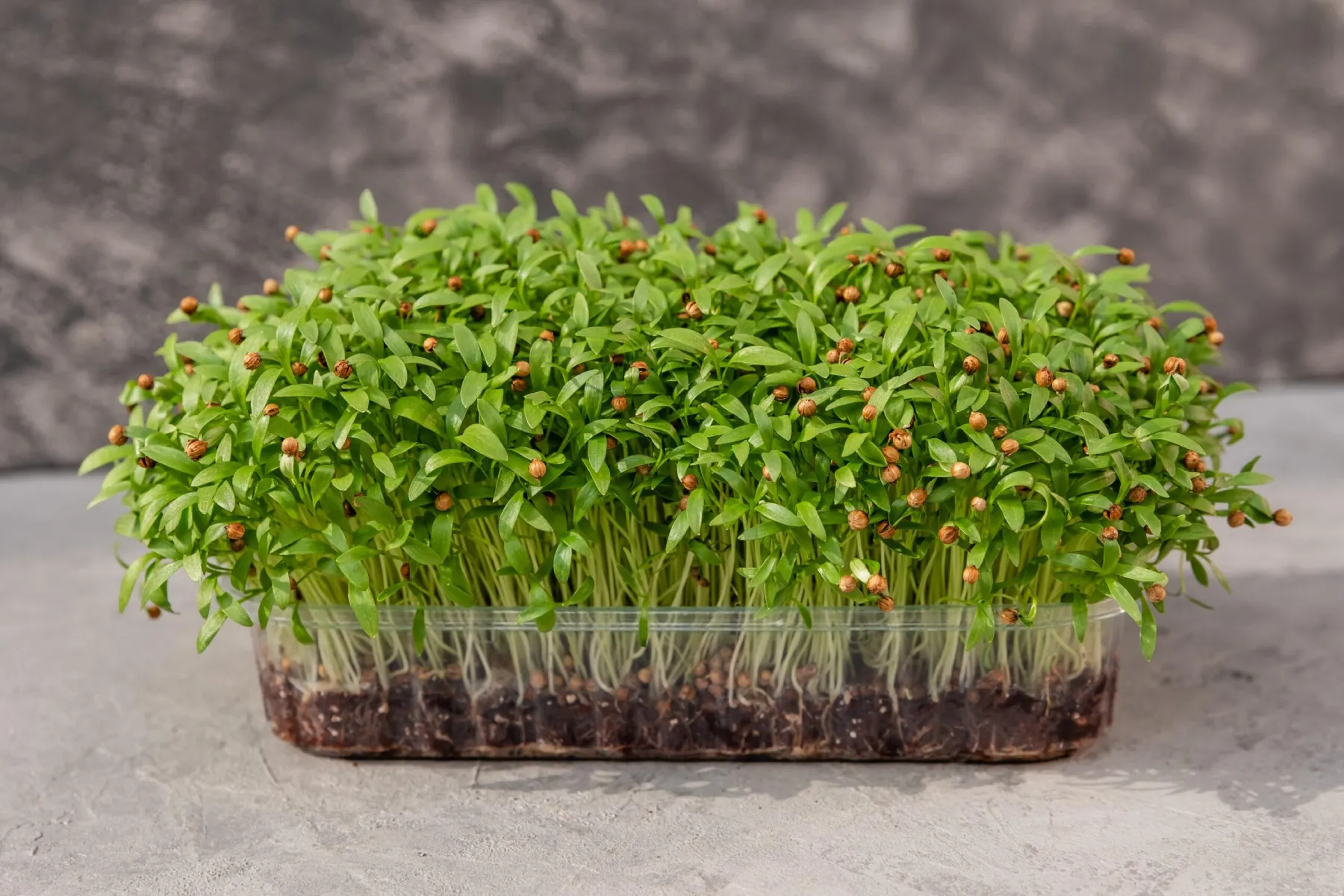
What is coriander?
Coriander (Coriandrum sativum) is one of the oldest known spice and medicinal plants in the world. It was already cultivated in ancient Egypt and was considered a valuable crop. Archaeologists even found coriander seeds in the tomb of Pharaoh Tutankhamun. Greeks and Romans also used coriander both as a spice and as a medicinal plant.
Today coriander grows on almost every continent. It is especially popular in Indian, Mexican, Asian, and Middle Eastern cuisine. While in Europe the seeds are often used as a spice, fresh leaves play an important role in many Asian countries.
Coriander or cilantro – are they the same?
Yes. Botanically, it is the same plant.
In German-speaking regions, “coriander” refers to both the seeds and the plant. In English, however, one often speaks of coriander seeds for the seeds and cilantro for the fresh leaves.
The leaves have a fresh, slightly citrusy flavour, while the seeds taste warm, spicy, and slightly sweet.
Why is coriander considered so healthy?
Although coriander is often perceived only as a spice, it contains a surprisingly large number of valuable nutrients.
The leaves provide, among other things:
- Vitamin C
- Vitamin K
- Beta-carotene (precursor to vitamin A)
- Folic acid
- Potassium
- Magnesium
- Calcium
- Iron
In addition, coriander contains numerous secondary plant compounds and essential oils. Particularly well known is linalool, which is responsible for the characteristic scent and is currently being intensively studied scientifically.
In recent years, coriander has been extensively researched. Scientific studies deal with, among other things, its antioxidant properties and its content of bioactive plant compounds.
Laboratory and cell studies suggest that compounds found in coriander can protect cells from oxidative stress. Research is also being conducted into the influence coriander may have on fat metabolism, digestion, and blood sugar levels.
Why does coriander taste like soap to some people?
Hardly any other kitchen herb divides opinions as strongly as coriander. While some people love its fresh, slightly citrusy flavour, others find it soapy or even unpleasant.
The reason for this lies not in the coriander itself, but in our genetics.
Scientists have discovered that a gene called OR6A2 influences the perception of certain aldehydes. These natural aromatic compounds occur in both coriander and some soaps and cleaning products.
People with a particular variant of this gene are especially sensitive to these compounds and therefore often perceive the taste as “soapy”.
Interestingly, this perception changes over time for many people. Those who eat coriander regularly in small amounts often become accustomed to the aroma and begin to perceive the fresh citrus notes more strongly.
This phenomenon impressively demonstrates how differently our sense of taste can function.
Why coriander as microgreens is something special
Coriander is one of the most demanding microgreens of all. Its seeds have a hard seed coat and germinate significantly more slowly than radish, broccoli, or mustard.
Many professional producers soak the seeds before sowing or gently break the seed coat to achieve more uniform germination.
While most microgreens can be harvested after just 6 to 10 days, coriander usually requires between 12 and 20 days.
Yet it is precisely this longer development period that makes it particularly aromatic.
Why coriander microgreens are harvested later
Coriander occupies a special position among microgreens. While radish, broccoli, or red cabbage are usually harvested at the cotyledon stage or shortly after the first true leaves appear, coriander grows considerably more slowly.
Many professional producers deliberately let it grow for longer and cut it only when one or even two true leaves have already developed. It is only at this stage that the typical intense coriander aroma develops, which so many food lovers prize.
As a result, coriander microgreens often already look like a miniature version of the mature plant. It is precisely this combination of tender leaves, intense flavour, and high freshness that makes it one of the most exclusive microgreens varieties.
Microgreens or mature plant?
It is often asked whether microgreens are fundamentally healthier than mature plants. The answer is somewhat more nuanced.
Mature coriander also possesses numerous valuable nutrients and has been used in cooking for centuries.
However, microgreens offer some practical advantages:
They are consumed immediately after harvest and are therefore particularly fresh. In addition, they are eaten together with their stems and young leaves, making them excellent for integrating into a varied diet.
Many scientific studies also show that microgreens of various plant species can contain a high concentration of certain vitamins and secondary plant compounds. The exact composition, however, depends on the variety, cultivation, and time of harvest.
Coriander in the GoGreen blends
Not everyone has the time or patience to grow coriander themselves. Since this variety grows more slowly and is somewhat more demanding than many other microgreens, many people opt for a practical alternative.
That is why coriander is one of the carefully selected ingredients in our freeze-dried microgreens blends:
- Supermix – 24 Varieties – our most versatile blend with 24 different microgreens.
- Supermix – Women Balance – specially formulated for women and supplemented with selected plants such as nasturtium, amaranth, and coriander.
Thanks to the gentle freeze-drying process (lyophilisation), only the water is removed from the product. The colour, aroma, and a large proportion of the natural vitamins, minerals, and secondary plant compounds are largely retained.
So even just one spoonful per day is enough to benefit from the diversity of numerous microgreens.
Growing coriander yourself
Even though coriander is somewhat more demanding than many other microgreens, growing it is well worth it. Anyone who has once experienced the scent of freshly harvested coriander microgreens quickly understands why they are so highly valued in fine dining.
Our microgreens seeds are carefully selected and have a high germination rate. They are suitable both for Microgreens growing and for sowing in the garden or raised bed.
With a little patience and the right care, coriander can easily be cultivated at home.
Conclusion
Coriander combines thousands of years of history, extraordinary aroma, and modern nutrition in a unique way.
As microgreens, it develops a particularly intense flavour and is therefore harvested later than many other crops. Although growing it requires a little more patience, it rewards with an unmistakable aroma and an impressive variety of valuable plant compounds.
Anyone who wants to benefit from the advantages of coriander at any time can also find it in our freeze-dried microgreens blends – practical, long-lasting, and easy to integrate into everyday life.